Todorov came up with a narrative theory that suggests all narratives follow a structure. The structure consists of the following steps:

- Equilibrium
- Disruption
- Recognition of disruption
- Attempts to repair disruption
- Return to equilibrium
An example of a film that conforms to this theory is Titanic. The steps in the film are:
- Everyone boards Titanic
- Boat hits iceberg
- Realization that boat is sinking
- Trying to get everyone safe on land
- Everyone is on land and off boat
Personally I do not agree with this theory as not all films follow it. Many films do not start with an equilibrium and do no return at the end.
 LEVI STRAUSS
Strauss came up with the theory of binary opposition. He said narratives all contain elements that can be paired based on opposition. These make the narrative move forward as they allow conflict. The word 'coward', for example, we understand based on the difference from its opposition 'hero'.
An example of this theory being applied in real media texts is Beyonces music video or 'Single Ladies'. The black against the white is binary opposites creating aesthetic.
 I agree with this theory as all films have some sort of binary opposite, however the opposition is not always central the the film.
ALLEN CAMERON
Cameron identified four different types of narrative: anachronic, forking paths, episodic and split screen
Anachronic
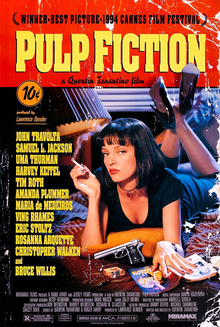
 This type of narrative involves the use of flashbacks or flash forwards. There is no clear dominance between any of the narratives. Often narratives are repeated from different perspectives. Examples of this narrative in film is Dunkirk and Pulp Fiction.
Forking paths
This narrative shows alternative versions of the story and different possible outcomes are shown. There are a number of plot lines that usually contradict each other. Perhaps the most famous example of this is Groundhog Day.
Episodic
 Episodic narratives are organised as an abstract series or narrative anthology. An abstract series has a non narrative system which shows organisation of narrative elements. Narrative anthology is a series of short tales that are disconnected but share a random similarity. For example all survivors of a crash.
Split Screen
This style divides the screen into two or more showing juxtaposing events in the same visual field. Requiem for a dream uses this style a lot especially when showing the steps of drug use.
I think these are narrative types that are evident in films today, however they are not the only narrative types available.
VLADIMIR PROPP
Propp developed a character theory after analyzing hundred of folk and fairy tales. He looked at the use of characters and roles in narratives. He decided all narratives share the same structure with the same characters. He finalized 7 character roles that all narratives have.
1. The villain who struggles against the hero
2. Hero who usually seeks something
3. Donor who provides the protagonist with an agent or object
4. Princess is usually reward for hero
5. Princess' father rewards the hero, usually attempts to marry him to his daughter
6. False hero is portrayed as and claims to be a hero but is not
7. Helper aids the hero
I do not agree with this theory as not all narratives have all of these characters, especially modern film.



No comments:
Post a Comment